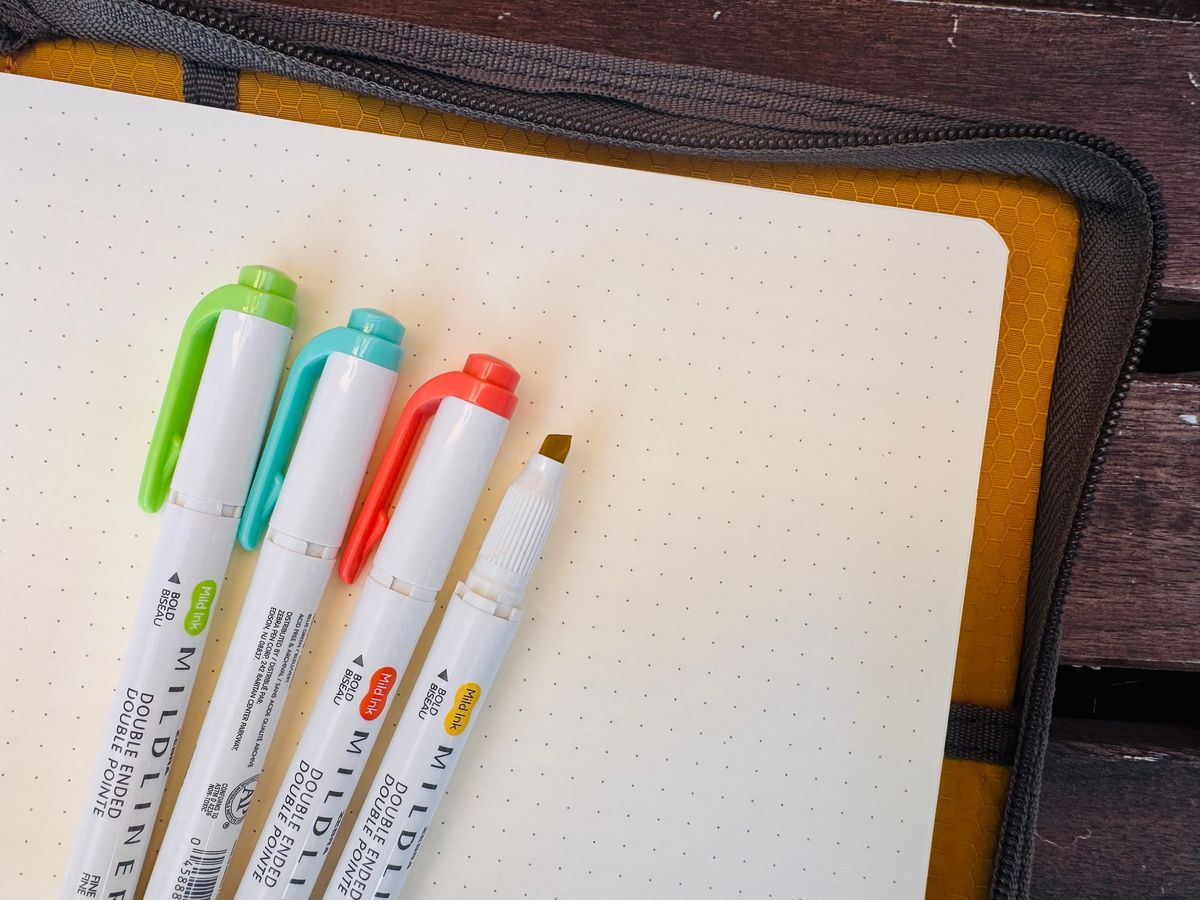
Inside my logbook: The monthly spread
The first in a short series exploring the notebook system that helps me organise my months, weeks and days

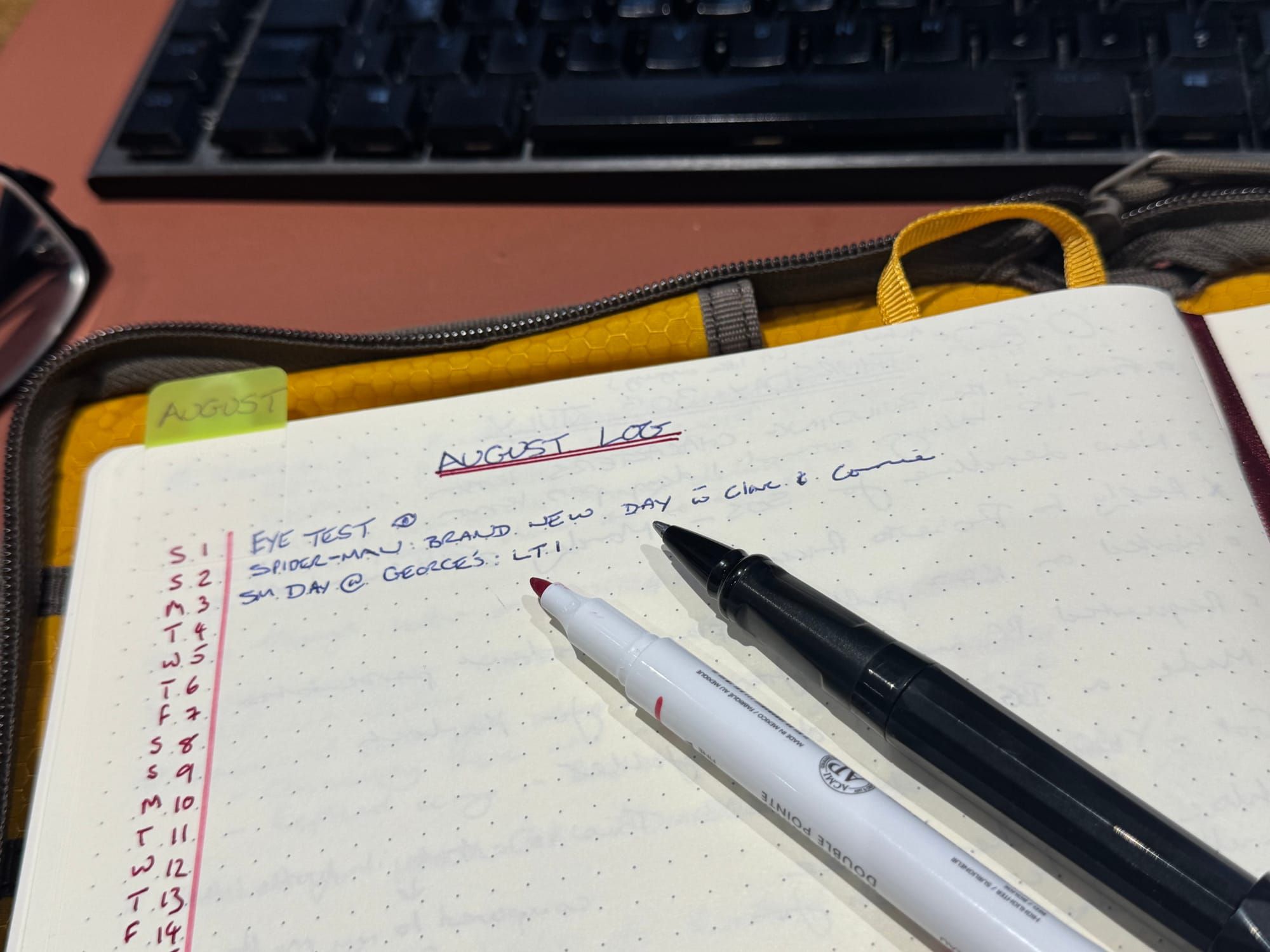
A couple of weeks ago, I posted about the satisfaction of finishing one logbook and moving to another. A few people asked for a peek beneath the covers to see how I organise my months, weeks and days, so over the next few weeks I'm going to do precisely that, sharing how I set up the pages of my journal and use them to keep track of what's going on.
WHAT THE HECKITY HECK ARE YOU TALKING ABOUT, SCOTT?
First things first, though... what's a logbook and why do I keep one?
Well, it's a way of organising my life that I've been using in one form or another since March this year.
It's a version of Ryder Carroll's Bullet Journal system, crossed with Austin Kleon's logbook, a tool that Austin simply describes as "a list of what I do every day."
At its heart, that's all it is: a book of lists, a way of recording what I'm up to month by month, week by week, and day by day. It's on paper, which gets me away from a screen and doesn't require an internet connection, but it hasn't replaced every part of my digital life. I still use an online calendar and project management software for the creative consultancy I run with George Mann, but everything else in my life can be found within the logbook's pages. Tasks, thoughts, ideas and, without getting a little woo woo, feelings.
Like the bullet journal, it's made up of various spreads and pages that I lay out each month. Nothing fancy and full of crossing-out and tippex, the layouts give me a chance to slow down for a moment as I organise my life, not to fill every conceivable moment with frenzied productivity, but to keep on top of things so that nothing (hopefully) falls through the net.
THE MONTHLY SPREAD
So let's start with the monthly spread. Here it is...
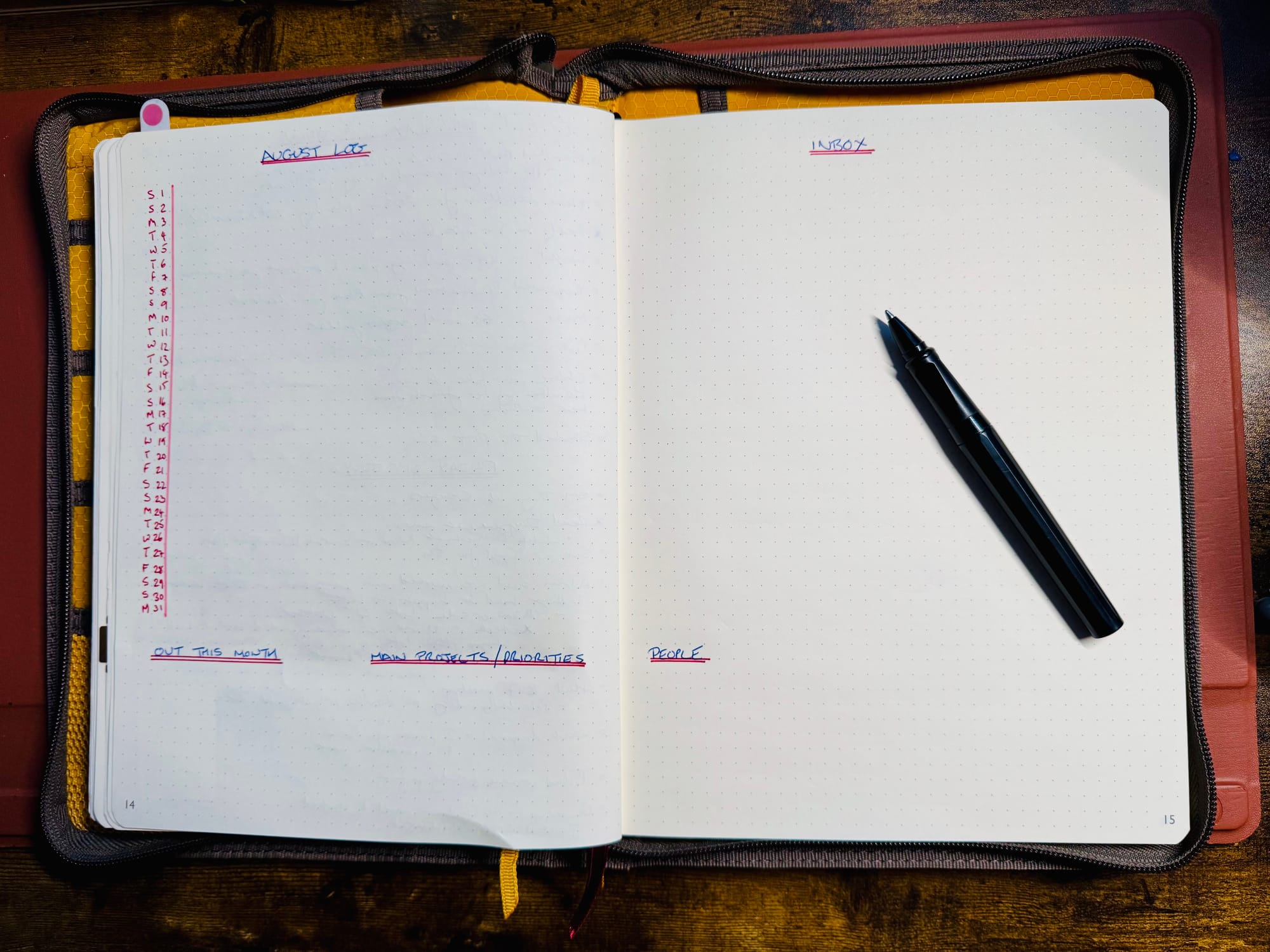
Let's break it down.
CALENDAR
On the left-hand page, you'll see the calendar, which is lifted straight from the bullet-journal method.
I don't use this to mark upcoming events – that's all on my digital calendar. This area is for jotting down the main events of the day as they happen – all the big things I want to remember. Day by day, it becomes a record that I can review at a glance. A memory list that puts everything in context.
OUT THIS MONTH & MAIN PROJECTS
Below, I list all the books or comics I have coming out this month (and the dates they drop), plus the three Main Projects I'll be working on.
The latter helps me keep my priorities front and centre as I refer back to the spread throughout the month. Everything I do is weighed against those priorities. Am I pushing my main projects forward or getting lost in the weeds of everything else?
This month, for example, it's:
- A creative consultancy with an RPG publisher (name withheld, thanks to pesky NDAs).
- A WFH short story for a new client.
- The outline for my next novel, codenamed Project: Soldier.
There will be other things buzzing around, of course, but those are the three projects that NEED to happen, come what may.
INBOX
On the right-hand page, I have the Inbox. This is where I store tasks that have to happen on a certain date, ready to be moved to the relevant to-do list when the day arrives. I also use it to jot down new tasks for the months ahead as they come in, referring back to the page regularly so I don't miss anything.
The aim is to never keep anything in my head, because the thought will disappear. If it's captured in the logbook, it will be seen again rather than being lost in the fog of my mind!
PEOPLE
At the bottom of the page, you'll see People, which is where I capture emails I have to write, folk I have to message and calls I have to make. Again, these will get transferred to my daily lists when they have to be done.
NOT FOR EVERYONE
So, there you go. Not exactly rocket science, but over the next few weeks, I hope you'll see why I find the logbook useful.
Not that it's for everyone.
When I posted a version of the above post on socials, a friend of mine replied that just looking at it made him tired. And that's understandable. For me, it's useful. Essential even. I have a medical condition that leaves me prone to fatigue if I'm not careful. My brain gets foggy, and I forget things, which is why I write them down. The logbook is just a way to organise that information so it's easy for me to find, especially when things are fuzzy around the edges. Everyone has their ways to cope, and this is mine.
NEXT... THE WEEKLY SPREAD
Next week, I'll share how I organise my weeks, drilling things down into manageable chunks.
If you think someone else would find this useful, please forward the email or send them the link. They can subscribe below.
Until next time, look after yourself and each other.

READ THE REST OF THE SERIES
Go down a logbook rabbit hole with me!
 Cavan Scott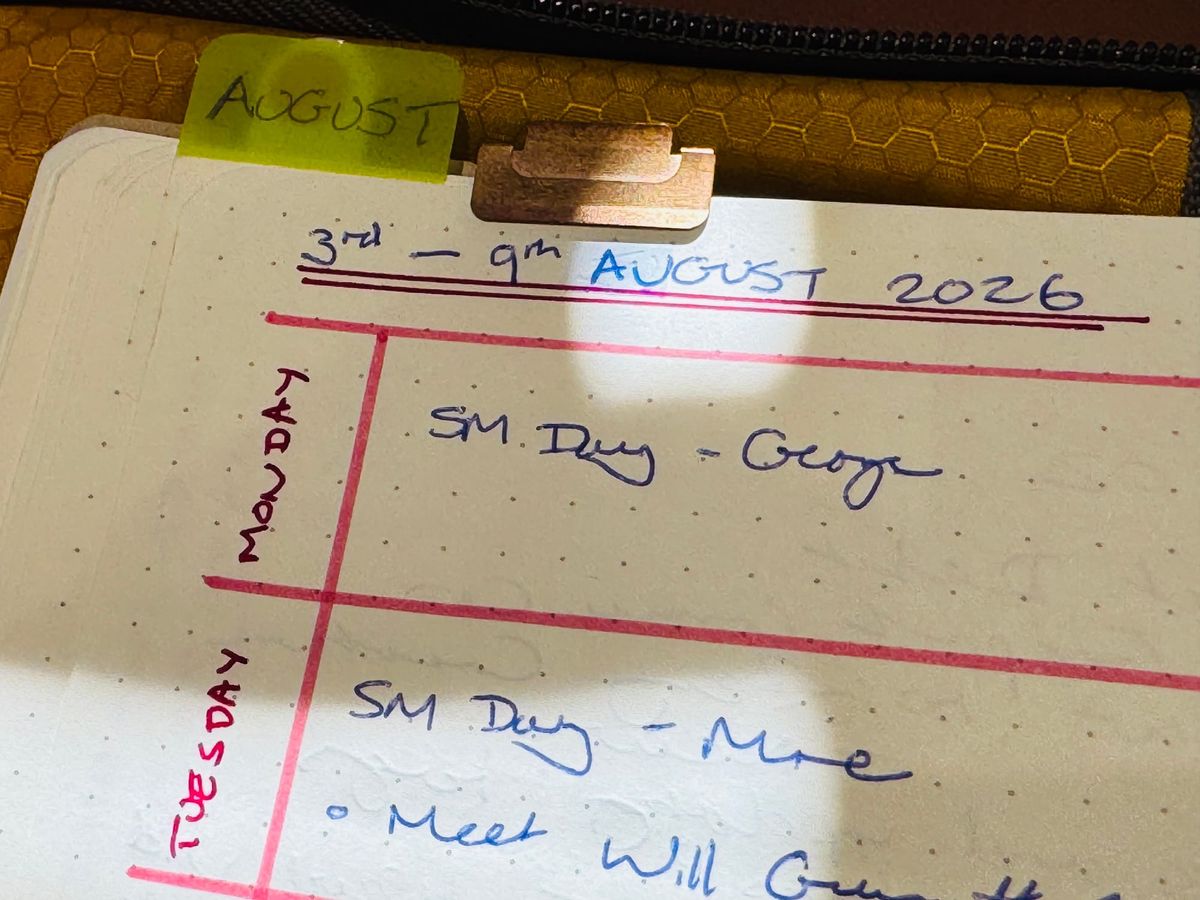
 Cavan Scott
 Cavan Scott